
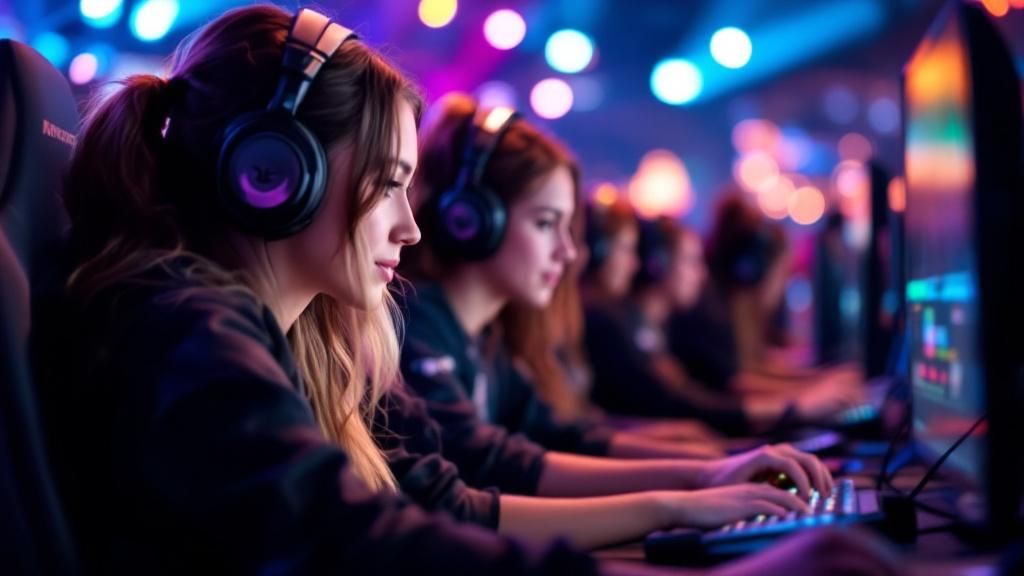
The esports industry, traditionally controlled by male players and audiences, is witnessing a remarkable transformation. Female gamers are actively challenging stereotypes and securing their rightful place at the highest competitive levels, from elite competitions to lucrative sponsorship deals. This article explores how women are overcoming the glass ceiling in professional gaming, investigating the obstacles they’ve faced, the trailblazing competitors leading this charge, and what their success means for the future of competitive esports worldwide.
Growing Visibility of Women in Competitive Gaming
The terrain of competitive gaming has experienced a major shift over the past decade. Female players have increasingly shown exceptional skill and dedication, securing acknowledgement in events that were traditionally viewed as male-exclusive domains. This shift reflects larger transformations within the esports sector, where skill and achievement are more highly regarded above sex. Major esports organisations now actively recruit female participants, recognizing both the business opportunity and the underutilised source of competitive skill that women represent in the sector.
Statistical evidence underscores this rising prominence. Recent research indicate that women now constitute around 30 to 40 per cent of the global gaming population, yet their participation in professional esports remains considerably lower. However, this disparity is narrowing at pace. Events showcasing female players have achieved record viewership, revealing substantial audience appetite for varied esports content. Financial backing in women’s teams have risen substantially, indicating that big organisations recognise the commercial viability and cultural significance of backing female esports players.
The prominence of accomplished women in gaming has sparked a powerful ripple effect throughout the industry. Emerging female players now have concrete examples to aspire towards, substantially shifting perceptions about gaming as a viable career path. Streaming platforms have amplified women’s representation, enabling skilled competitors to develop substantial followings on their own terms. This democratisation of gaming content has allowed women to bypass established gatekeeping structures and position themselves as influential figures within the esports ecosystem, motivating the next generation of female competitors.
Organisational restructuring within major esports franchises have further accelerated women’s progression. A number of leading organisations have created women-focused squads, developed extensive training infrastructure, and introduced mentoring schemes specifically designed to nurture emerging talent. These organisational efforts signify genuine recognition that diversity strengthens esports competition. Furthermore, regulatory authorities have begun establishing regulations promoting inclusivity, guaranteeing that competitions offer equitable opportunities for women’s involvement and fair compensation.
Despite significant progress, challenges remain within the esports landscape. Online abuse and hostile conduct keep impacting female players unfairly, establishing unwelcoming spaces that discourage participation. Nevertheless, the collective determination of female gamers, paired with increasing industry support, suggests these obstacles are slowly declining. The momentum currently building within professional esports indicates that women’s prominence will keep growing, substantially transforming the competitive gaming industry for years ahead.
Obstacles and Challenges Encountered by Women in Esports Professionals
Despite considerable progress, female esports professionals continue encountering significant obstacles within the industry. Gender-based discrimination, insufficient representation in professional teams, and limited sponsorship opportunities remain ongoing challenges. Additionally, many female gamers face doubt about their competitive skills and struggle with unequal prize distributions. These structural barriers, combined with cultural pressures and cultural stereotypes, create a formidable environment that discourages aspiring female players from developing professional careers in esports.
Tackling Discrimination and Harassment
Harassment continues to be a considerable problem for female esports professionals, in both online and offline settings. Hostile activity within gaming communities, such as misogynistic comments and planned harassment, creates toxic atmospheres that undermine participation and confidence. Numerous women players report experiencing unfair treatment from teammates, opponents, and spectators. In spite of these challenges, a considerable number of women have demonstrated impressive fortitude, developing support networks and pushing for inclusive policies. Their commitment to succeeding despite systemic prejudice has catalysed substantive discussions about standards for professional conduct in professional esports bodies.
Creating safer and more equitable spaces requires dedication by industry stakeholders, tournament organisers, and gaming communities. Leading organisations are implementing more rigorous behavioural guidelines, establishing safeguarding procedures, and promoting diversity initiatives. Educational campaigns demonstrating the impact of female professionals help combat deeply rooted prejudices and misconceptions. Furthermore, mentorship programmes linking seasoned female competitors with emerging talent provide crucial direction and encouragement. These joint undertakings demonstrate that building inclusivity benefits the entire esports ecosystem by drawing varied players and expanding the competitive player pool.
- Put in place strict anti-harassment policies throughout the sector
- Develop mentorship programmes to support aspiring female athletes
- Promote greater diversity across broadcast coverage
- Create specialist support systems to assist female athletes
- Enhance clarity on sponsorship and prize distribution
Future Prospects and Sector Growth
The esports industry stands at a critical turning point, with unprecedented opportunities opening up for female gamers. As major esports organisations progressively commit resources in women’s teams and dedicated leagues, the gaming arena is developing quickly. Sponsorship deals, distribution deals, and tournament prize pools designed for female players are increasing substantially. This monetary investment demonstrates authentic industry acknowledgement that women constitute an underexploited demographic with considerable earning capacity, delivering enduring career opportunities for emerging women players.
Looking ahead, the direction for women in esports appears highly encouraging. Educational institutions are introducing esports scholarships for female students, whilst gaming companies are introducing inclusive recruitment policies. Community-led programmes and community-driven programmes are nurturing young talent from diverse backgrounds. As visibility grows through streaming platforms and mainstream media coverage, more women will undoubtedly develop professional gaming careers. The combination of technological advancement, organisational commitment, and cultural shift suggests that gender parity in esports is no longer simply a distant aspiration but an achievable reality within the coming decade.
